House for Rent in the Countryside in Denmark: A Guide
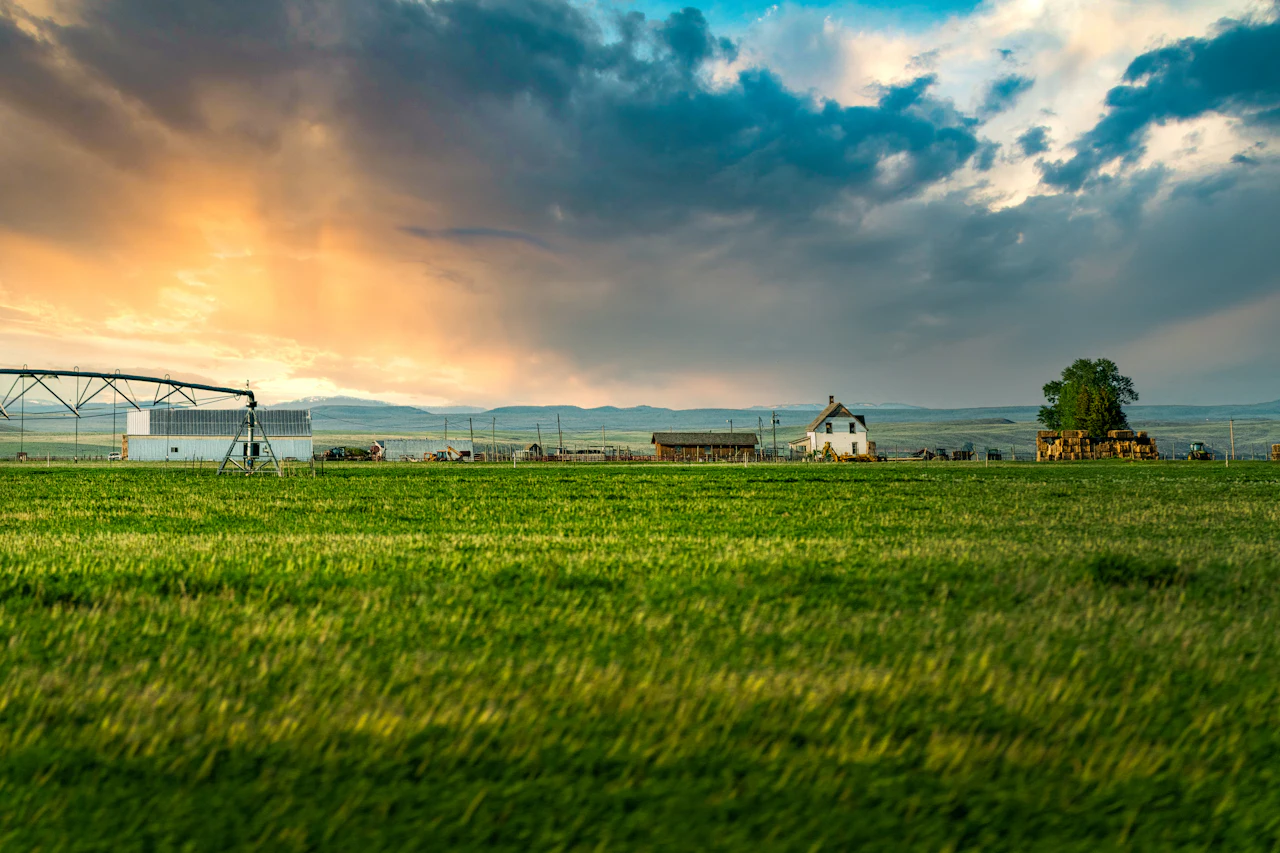
Updated October 2026. Do you dream of waking up to birdsong instead of traffic, of a garden for the children or the dog, and of more square metres for your money? Then a rental home in the countryside is worth considering. But renting a house in the countryside is not the same as renting a flat in town. The heating might come from an oil boiler, a heat pump or a wood-burning stove. The water might come from the property’s own borehole, and the nearest supermarket and railway station could be a long way off.
In this guide you can see what a rented house typically costs, based on listings on Bolighub, and how to factor in transport. You also get a checklist for the viewing and advice for landlords who want to let a house in the countryside.
In short
- You usually get more space for your money. Rent per square metre is far lower in rural municipalities than in the Copenhagen area. But transport and heating can eat up part of the saving.
- Include transport from the start. Many people need an extra car. If you have a long commute, you can get kørselsfradrag (a tax deduction for commuting). In 2026 the rate is DKK 3.17 per km for the part of your daily journey that falls between 25 and 120 km.
- A sommerhus (holiday home) is not a year-round home. As a tenant, you generally cannot legally live all year in a holiday home in a designated holiday-home area.
- Ask about heating, water, internet and the garden before you sign. This is where most surprises in the countryside come from.
- Get everything in writing. For example, who looks after the garden, clears snow, empties the septic tank and pays for water tests.
What do you gain, and what do you give up?
Living in the countryside isn’t just romance. It’s a choice about everyday life. Here are the typical pros and cons:
| What you typically get | What you typically have to get used to |
|---|---|
| Peace, nature, dark nights and birdsong | Farm noise, such as tractors early in the morning at harvest time |
| More square metres and often a garden, shed or barn | More gardening and more space to keep warm |
| Lower rent per m² | Further to work, shops, the doctor and leisure activities |
| Room for a dog, hens, a workshop or a hobby | Often a need for a car, perhaps two |
| A close-knit village community, if you want it | Fewer rental homes to choose from and fewer buses and trains |
| Less traffic and more freedom for children | Poorer internet and mobile coverage in some places |
A good rule of thumb: the more of your daily life that takes place in town, the more expensive and inconvenient it becomes to live far out. If you work from home several days a week, the countryside is much easier to make work.
What does a house for rent in the countryside cost?
Bolighub’s figures don’t distinguish between town and country. But they clearly show how much the price per square metre falls as you move away from the largest cities. The figures below are medians based on listings on Bolighub, calculated on 30 October 2026. Rent excludes utilities.
Houses for rent across Denmark: 206 listings with a typical rent of DKK 14,100 a month for 133 m², equivalent to DKK 118 per m². The range is wide. The cheapest tenth are below about DKK 6,400, and the most expensive tenth are above DKK 44,500.
| House, by number of rooms | Typical rent | Typical size |
|---|---|---|
| 3 rooms | DKK 10,385 | 84 m² |
| 4 rooms | DKK 12,400 | 114 m² |
| 5 rooms or more | DKK 23,998 | 180 m² |
The difference between areas is striking. Here is the rent for houses in some of the areas with enough listings to say something meaningful:
| Houses in the area | Typical rent | Typical size | Per m² |
|---|---|---|---|
| Hjørring | DKK 10,000 | 114 m² | DKK 80 |
| Odense | DKK 11,400 | 120 m² | DKK 90 |
| Vejle | DKK 10,585 | 90 m² | DKK 118 |
| Copenhagen | DKK 24,400 | 120 m² | DKK 221 |
| Gentofte | DKK 49,000 | 228 m² | DKK 214 |
The number of houses per area is small, from 6 to 27 listings, so the figures are an indication rather than a fixed price. Looking at all property types, the typical rent per m² is DKK 68 in Frederikshavn and DKK 75 in Holstebro, compared with DKK 229 in Copenhagen.
What does this mean in practice? A 120 m² house at DKK 80 per m² costs about DKK 9,600 a month. The same size at DKK 221 per m² costs about DKK 26,500. Even after paying for a car and heating, there is often money to be saved. But it depends entirely on how far you have to drive and how the house is heated. You’ll find more figures on the rental market page.
The hidden bill: transport and the commuting deduction
Transport is the cost most people underestimate when they move to the countryside. Do a realistic calculation before you say yes:
- How many of you need to commute, and how? Can one of you take the bus or train from the nearest stationsby (a small town with a railway station), or will you need two cars?
- What does the car cost each month? Include fuel or electricity, insurance, ejerafgift (annual vehicle tax), servicing and depreciation. Use your own figures.
- What about everything else? Shopping, the children’s activities, the doctor and friends. Driving beyond your commute quickly adds up to a lot of kilometres.
Kørselsfradrag (commuting deduction). If you have a long way between home and work, you can get a tax deduction for travel. According to Skat (the Danish Tax Agency, in Danish), these rates apply for 2026, as raised by the Folketing (the Danish parliament):
| Daily driving, round trip | Rate per km in 2026 |
|---|---|
| 0-24 km | No deduction |
| 25-120 km | DKK 3.17 |
| Over 120 km | DKK 1.59 |
| Outlying municipalities and certain small islands, from 25 km | DKK 3.51 |
Worked example: You live 35 km from work and drive 70 km a day. The first 24 km don’t qualify for a deduction, so you get a deduction for 46 km. That gives 46 × DKK 3.17 = about DKK 146 per working day. With 220 working days, that comes to about DKK 32,000 a year. Remember that this is a deduction from your income, not an amount paid out to you. You only save the part that corresponds to its tax value. The rates for 2027 may be different, so check with Skat before you do the sums for next year.
What kinds of homes are there in the countryside?
The supply of rental homes in the countryside is smaller and more mixed than in town. Typically you’ll find:
- Farmhouses on agricultural properties, where the farmer lives elsewhere or has merged the land with another farm.
- Village houses and smallholdings, often older houses with large plots, outbuildings and plenty of character.
- Terraced houses and flats in stationsbyer (railway towns), often owned by almene boligorganisationer (non-profit housing associations). Here you get rural peace and quiet, but are still within walking distance of the bus, school and local shop.
- Annexes and homes in former farm buildings that have been converted for living in.
A railway town can be the best compromise if you want birdsong without being entirely dependent on a car.
How to find a rental home in the countryside
- Search a wide area. There are few homes in any one village. Search the whole municipality or within a radius of your workplace, and see all houses for rent in one place on Bolighub.
- Set up a search agent. Homes in the countryside are often let quickly because there are so few of them. With a search agent you’ll be notified as soon as there is a match.
- Use the local network. Many houses in the countryside are never widely advertised. Ask in the village Facebook group, on the noticeboard at the local shop, in the local newspaper and among farmers in the area.
- Sign up with almene boligorganisationer in the railway towns. The waiting time can be shorter than in the big cities.
- Be extra careful about scams. A cheap house with views over the fields is exactly the kind of listing scammers use. See the house before you pay anything, and read our advice on searching for a rental safely.
Watch out: a holiday home is not a year-round home
In autumn, cheap holiday homes often appear for “winter rental” or even “year-round rental”. Be aware of the rules:
- According to Borger.dk (the Danish public information portal, in Danish), holiday homes are not intended for year-round living, and you may normally only live in them in summer. Exceptions include houses that were legally year-round homes before the area became a holiday-home area, pensioners who have owned the house for a year, and owners who have been granted an exemption.
- The exceptions for pensioners and exemptions apply to owners. Lejre Kommune (in Danish) states directly that the municipality cannot legally grant an exemption to tenants or users of a holiday home.
- Outside the period 1 March to 31 October, stays in holiday homes in holiday-home areas are generally limited to shorter holidays and weekends.
- Borger.dk also warns that holiday homes are often less well insulated and can lead to large heating bills and a risk of damp and mould if you live in them in winter.
What this means for you as a tenant: If you rent a holiday home as your permanent home, you risk having to move out at short notice if the municipality steps in. Look for a home that is approved for year-round living. If in doubt, ask the municipality before you sign. Exceptions exist in special cases, for example on some small islands, so the rules can depend on the specific house.
Checklist: what to ask before you sign
Take this list to the viewing, and ask for the answers by email. That way you have documentation if a disagreement arises later.
Heating and energy
- How is the house heated? Oil boiler, wood-pellet boiler, heat pump, electric heating, wood-burning stove or district heating?
- What was the consumption over the last one to two years, in litres, kWh or kroner? Ask for previous tenants’ bills.
- What is the energy label like? According to the Danish Energy Agency’s (Energistyrelsen) Sparenergi website, a house must have an energy label if it is let for more than 4 weeks, and the label must be shown in the listing. The landlord pays for it.
- If the house has a wood-burning stove, ask whether it may be used, where the firewood should be stored, and who pays the chimney sweep.
- Who orders and pays for oil or wood pellets, and how is it settled?
Water and wastewater
- Does the water come from a waterworks or from the property’s own well or borehole?
- If there is a private borehole: Ask for the latest water analysis. According to guidance from several municipalities, if the house is let, the water must be tested under a monitoring programme. Assens Kommune (in Danish), for example, states that when a property is let, a monitoring programme set by the municipality must be followed, and the test results must be sent to the municipality. Municipalities describe the requirements slightly differently, so ask your municipality if you are unsure.
- Is the house connected to the sewer, or does it have a septic tank or soakaway? Who pays for emptying it, and what are you allowed to pour down the drain?
Internet and mobile
- What connection can you get at the address: fibre, cable, copper or only mobile broadband? You can look up the address on Tjekditnet.dk, which is run by the Danish Agency for Digital Government (Digitaliseringsstyrelsen).
- Check the indoor mobile coverage yourself at the viewing. Make a call from the room that will be your office.
- If you work from home, the internet is not a minor detail. It can decide whether the home works for you at all.
Road, snow and rubbish
- Is the house on a public road or a private shared road? Who maintains the road and the driveway and clears the snow?
- Where are the bins kept, and how far do they need to be pulled on collection day?
- Can a post van, an ambulance and a removal van get there all year round?
Garden, outbuildings and maintenance
- How much of the plot is included in the tenancy? Are the barn, carport or field included?
- Who mows the lawn, trims the hedge and fells trees? Is a lawnmower included in the rent?
- Under lejeloven (the Danish Rent Act), the landlord must keep the property and the rented premises properly maintained. However, it can be agreed that the tenant takes over the maintenance. In some properties, exterior maintenance cannot be transferred to the tenant, but it can always be agreed that the tenant looks after the garden that belongs to the tenancy (lejeloven sections 112 and 115 on Retsinformation, in Danish). What can be agreed depends on the property and the municipality. Read the contract carefully, and find out more about maintenance and repairs in a rental property.
Neighbours and surroundings
- Are there active farms, livestock buildings or biogas plants nearby? These can cause smells, especially when slurry is being spread, and noise from machinery early and late at harvest time.
- Is there hunting on the surrounding fields?
- Visit the place at a different time from the viewing if you can, for example on a weekday morning or in the evening.
Everyday life
- How far is it to the school, childcare, the doctor and a grocery shop?
- Is there a bus, and how often does it run? Does it also run at weekends and in the school holidays?
- How long does the journey to work take in rush hour and in winter?
Three examples
The family from Aarhus. Mette and Jonas live with two children in a three-room flat in the city. They find a four-room, 120 m² house about 30 km outside the city for about DKK 9,500 a month. The rent is lower than in the city, but they will have to buy a second car, and the house has an oil boiler. They ask for the last two years’ oil bills and do all the sums before signing. The numbers add up because Jonas can work from home three days a week.
The home worker. Søren works in IT and has found a farmhouse with views over the fields. He looks up the address and sees that there is only a low-speed copper connection and weak mobile coverage. He asks the landlord whether there are plans for fibre, but the answer is no. Instead he chooses a village house five kilometres away that has fibre.
The winter let. In October, Lærke sees a holiday home at a very low rent with the text “can be used all year”. She asks the municipality and is told that the house is in a holiday-home area without permission for year-round living. She turns it down and looks for a year-round home in the nearest railway town instead.
Common mistakes
- Comparing rents and forgetting transport. An extra car can cost more than you save on rent.
- Underestimating the heating bill. A large, older house with an oil boiler or electric heating can be expensive in winter. Always ask for actual consumption.
- Taking a holiday home as your permanent home. As a tenant in a holiday-home area, this is generally not legally possible.
- Overlooking the internet. It can be difficult and expensive to get a good connection at an address without fibre.
- Agreeing to “a bit of gardening” without knowing what it means. A plot of several thousand square metres is a part-time job.
- Having verbal agreements about snow, the septic tank and water. These are exactly the things people end up disagreeing about later.
- Only seeing the house on a sunny day in May. The road in January and the smell when slurry is spread are part of the package.
Advice if you want to rent in the countryside
- First decide how far out you want to live. A railway town, a village and a detached farmhouse are three very different ways of life.
- Draw up a full budget before you look at houses: rent, heating, electricity, water, car, insurance and commuting. Compare it with what you pay today.
- Ask for documentation: energy label, water analysis, consumption figures and a description of what is included in the tenancy.
- Have special agreements written into the contract, for example about the garden, snow clearing, the septic tank, the wood-burning stove and outbuildings.
- If you have pets, ask early. Many houses in the countryside are open to pets. Among the houses on Bolighub where the landlord has specified it, 137 out of 180 allow pets. Even so, get it in writing.
- Make a thorough move-in report, including the garden, outbuildings and installations such as the boiler and pump.
Advice for landlords of houses in the countryside
- Describe the location honestly in the listing. State the distance to the nearest town, school, shops and bus, and the type of internet connection. You’ll get fewer but better enquiries. See also our advice on making a great listing for your rental property.
- Remember the energy label. If you let the house for more than 4 weeks, it must have an energy label, and the label must be shown in the listing, according to the Danish Energy Agency’s Sparenergi.
- If the house has its own borehole, check the water-testing requirements with the municipality. According to guidance from several municipalities, a monitoring programme applies when the property is let, and the test results must be sent to the municipality.
- Agree the division of tasks in writing. State in the contract who looks after the garden, hedges and trees, who clears snow, and who is responsible for emptying the septic tank and servicing the boiler or heat pump. Be aware that there are limits to how much exterior maintenance a tenant can take on. Get advice if you are unsure.
- Don’t let a holiday home as a year-round home unless it can legally be used all year. It can cause problems for both you and the tenant.
- Give the tenant an introduction to the house. Show them how the boiler, pump and wood-burning stove work, and where the main stopcock is. It prevents damage and emergency call-outs.
Who should you contact, and when?
- The municipality (kommune): if you are unsure whether a house may be used as a year-round home, and about requirements for private water supply, wastewater and rubbish.
- Skat: about the commuting deduction and rates. You can update your forskudsopgørelse (preliminary income assessment) when you move.
- The landlord, in writing: before you sign, about everything on the checklist, and later about defects and faults.
- Huslejenævnet (the rent tribunal) or a tenants’ association: if you disagree about rent, maintenance or moving out.
Summary
A house for rent in the countryside can give you birdsong, space and lower rent per square metre. But your budget also has to cover a car, commuting and heating. Always check the heating, water supply, internet and who looks after the garden and the road. Get the agreements in writing. Don’t rent a holiday home as your permanent home. Search widely, use the local network, and set up a search agent so you can act fast when the right house comes along.
FAQ
Is it cheaper to rent a house in the countryside than in town?
Rent per square metre is usually considerably lower. On Bolighub, for example, houses in Hjørring are at DKK 80 per m², compared with DKK 221 in Copenhagen (calculated on 30 October 2026). But costs for a car, commuting and heating can be higher, so draw up a full budget before you draw conclusions.
Can I rent a holiday home and live there all year?
Generally no, if the house is in a holiday-home area. The exceptions for pensioners and exemptions apply to owners, and municipalities cannot grant exemptions to tenants. Look for a home approved for year-round living, or ask the municipality.
Who has to look after the garden in a rented house in the countryside?
It depends on the tenancy agreement. The landlord must keep the property properly maintained, but it can be agreed that the tenant looks after the garden belonging to the tenancy. If the contract doesn’t say anything clear, have it written in before you sign.
What should I watch out for if the house has its own well?
Ask for the latest water analysis. When a house with its own borehole is let, the water must, according to guidance from several municipalities, be tested under a monitoring programme. The requirements are described differently, so ask the municipality if the landlord can’t document the water quality.
Can I get a commuting deduction if I move to the countryside?
Yes, if your daily round trip between home and work is over 24 km. In 2026 the rate is DKK 3.17 per km between 25 and 120 km and DKK 1.59 over 120 km. In outlying municipalities and on certain small islands it is DKK 3.51. The rates change from year to year.
How can I find out whether there is good internet at the address?
Look up the address on Tjekditnet.dk, where you can see which connections and speeds are available at the address. Also test the indoor mobile coverage yourself at the viewing, and ask the landlord what connection the previous tenant had.
Sources and further reading
- Skat: Kørselsfradrag, rates for 2026 (in Danish)
- Borger.dk: Sommerhus, including year-round living (in Danish)
- Lejre Kommune: Helårsbeboelse i sommerhus (year-round living in a holiday home) (in Danish)
- Assens Kommune: Private brønde og boringer (private wells and boreholes) (in Danish)
- Retsinformation: Lejeloven (in Danish), especially sections 112 and 115 on maintenance
- Energistyrelsen, Sparenergi: Spar energi med boligens energimærke (save energy with your home’s energy label)
- Digitaliseringsstyrelsen: Tjekditnet.dk on broadband and mobile coverage at address level
- Bolighub: rent figures based on listings on Bolighub, calculated on 30 October 2026