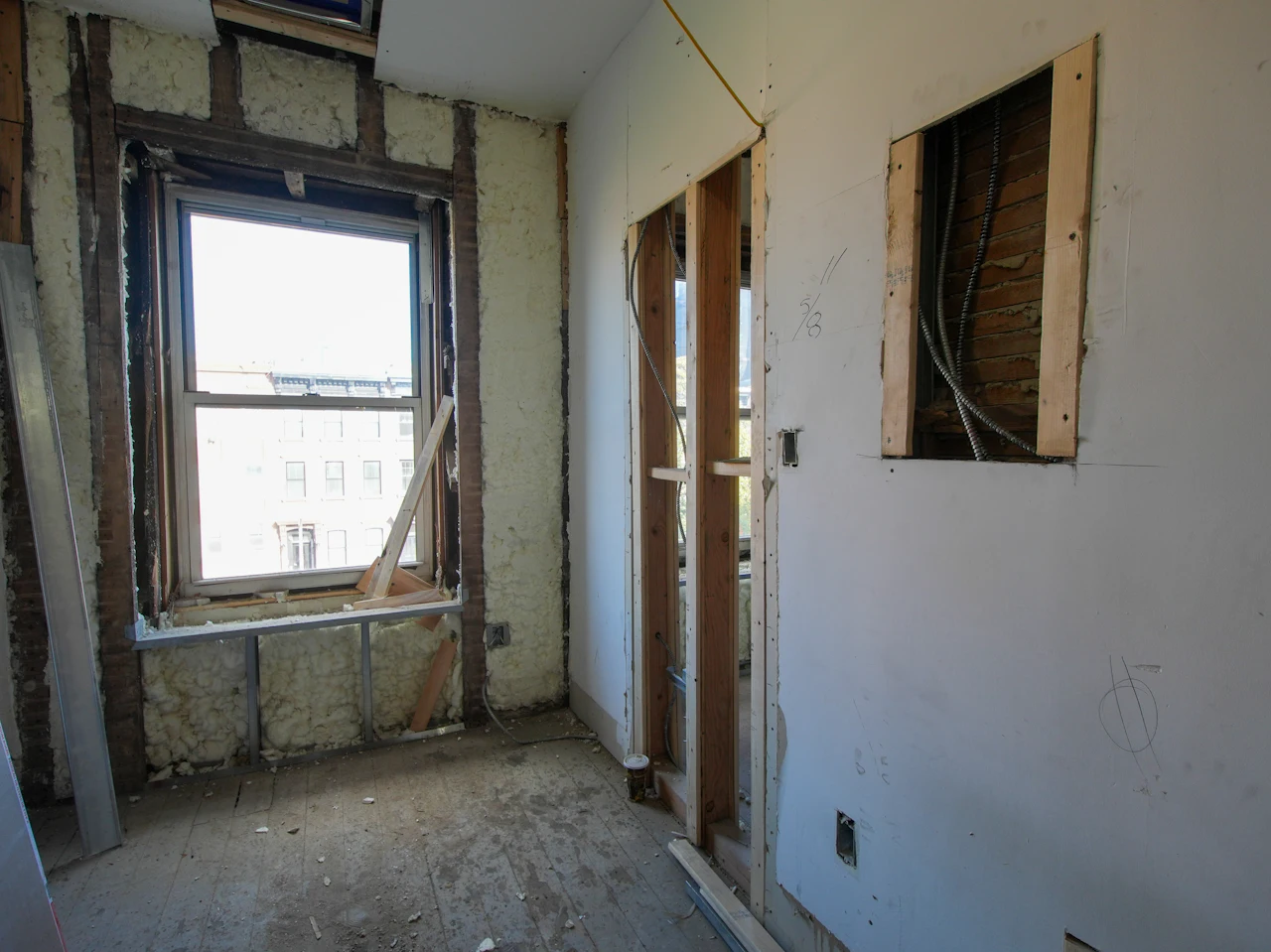
Rental not ready on move-in day: Your rights in Denmark
You’ve booked the removal van and given notice on your old home. Then the landlord rings: the previous tenant hasn’t moved out, the builders haven’t finished, or the new build is delayed. What now?
The Danish Rent Act (lejeloven) has a specific rule for exactly this situation. As a tenant, it gives you the right to a rent reduction, in some cases the right to cancel the agreement, and in some cases the right to compensation. Below we go through the rules, what you should do now and what the landlord ought to do.
This article covers private rental homes that fall under lejeloven. If you live in an almen bolig (non-profit social housing), a different act applies, almenlejeloven, and you should contact the housing organisation.
The short answer
- If the home isn’t ready on the agreed date and that isn’t your fault, you can demand a proportionate reduction in rent. In other words, you don’t have to pay full rent for a home you can’t use.
- If the delay is substantial, you can cancel the lease. As a rule, this requires that you’ve first sent the landlord a written formal demand (påkrav) and that you still can’t move in within a reasonable time.
- If you have expressly made it a condition that you must be able to move in on a specific date, you can cancel over any delay at all.
- Compensation for things like a hotel or storage may be possible. It depends on why the home isn’t ready.
- These rules can’t be overridden in the lease to your disadvantage.
What does the Rent Act say?
The rule is in section 94 of lejeloven (in Danish). It covers three situations where you can’t take over the home at the agreed time:
- The home isn’t finished, for example because a new build is delayed or a renovation hasn’t been completed.
- The previous tenant hasn’t moved out.
- There is some other obstacle to you taking over the home.
It’s a condition that the delay isn’t caused by you, for example because you haven’t paid the depositum (deposit) or didn’t collect the keys at the agreed time.
Under section 101 of lejeloven, the rules on delay and defects (sections 94-100) can’t be overridden by agreement to the tenant’s disadvantage. If your lease says that “the landlord is not liable for delay” or “the tenant cannot claim a reduction”, the landlord generally can’t use that against you.
Delay or defect?
These are two different things, and different rules apply:
| Situation | What is it? | Rules |
|---|---|---|
| You can’t get into the home, or parts of it aren’t available | Delayed handover | Lejeloven section 94 |
| You’ve got the keys, but the home isn’t in order, e.g. not cleaned or with a faulty cooker | Defect in the home | Lejeloven sections 89-92 and 95-97 |
Under section 89, the landlord must make the home available in good and proper condition. At handover it must be clean, the windows must be intact, and the outer doors must have working locks and keys. If you find defects, section 91 says you must notify the landlord no later than 2 weeks after the tenancy begins. This doesn’t apply to defects you couldn’t have spotted with ordinary attention.
Your three options as a tenant
1. Proportionate rent reduction
You can demand a reduction in rent for the period when the home isn’t available to you. According to the preparatory works (the explanatory notes that accompanied the bill), the reduction is as a rule equal to the full rent if the home can’t be used at all. If you can use part of the home, the reduction is set based on an assessment of how much less the home is worth to you.
Worked example: The median rent for a 3-room flat on Bolighub is DKK 9,495 a month. The figure is based on listings on Bolighub on 2 November 2026, and you can find more figures on the rental market page. If you can’t move in until 10 days after the agreed date in a 30-day month, that works out at roughly DKK 9,495 divided by 30 and multiplied by 10, so a reduction of about DKK 3,165. The calculation is only an illustration. How the reduction should be calculated in your case may depend on the specific circumstances.
Be careful about deducting the money yourself. If you’ve already paid the first month’s rent, you should demand in writing that the reduction is paid back or offset against your next rent payment, and ideally get a written agreement with the landlord. If you deduct an amount yourself and it turns out to be too much, you could face a case for non-payment. If in doubt, pay with a written reservation of your rights and get advice.
2. Cancelling the lease
Cancelling (at hæve) means you withdraw from the agreement so you’re no longer bound by it. Under section 94(2), you can as a rule cancel when:
- the delay is substantial and can’t be assumed to be of no importance to you,
- you have sent the landlord a formal demand (påkrav) after the delay occurred, meaning a clear written message that you require to take over the home, and
- the handover can’t take place within a reasonable time after the demand.
The law doesn’t define “substantial” or “reasonable time”. It’s assessed case by case, and ultimately the courts decide. A delay of a few days will often not be enough. A delay of several weeks, or with no new date at all, may be a different matter. The preparatory works also attach weight to whether the landlord acts quickly to remove the obstacle, for example by taking steps to get a previous tenant out.
There are two important exceptions:
- You expressly made the date a condition. If you made it clear to the landlord, typically in writing, that moving in on a specific date is decisive for you, you can cancel over any delay. According to the preparatory works, it isn’t enough that a date is written in the lease. It must be clear that the date is decisive.
- The home wasn’t finished and no date was agreed. If the home wasn’t finished when you made the agreement and no handover date was agreed, you can cancel the agreement at any time before handover.
If you cancel the agreement, you should at the same time demand repayment of your depositum and your forudbetalt leje (rent paid in advance).
3. Compensation
Compensation covers documented financial losses, for example:
- a hotel or temporary accommodation,
- storing your furniture,
- extra van hire or an extra bill from the removal company,
- rent for your old home if you have to stay on longer.
The rules depend on why the home isn’t ready:
- The previous tenant hasn’t moved out: Under section 94(3), you can claim compensation, even if you cancel the agreement. This doesn’t apply, however, if the landlord can prove that the delay isn’t due to circumstances the landlord is responsible for. So the burden of proof is on the landlord.
- The home isn’t finished, or there’s some other obstacle: According to the preparatory works, the general rules on compensation apply. You must be able to show that the landlord is liable, for example because the landlord has acted negligently. If the landlord has guaranteed moving in on the date, the landlord is liable if that doesn’t happen. If, on the other hand, the delay is due to a chance event the landlord isn’t responsible for, you generally can’t get compensation.
In every case, you must be able to document your loss. You should also keep your expenses at a reasonable level. It’s hard to get a luxury hotel bill covered if there were cheaper alternatives.
Step by step: What to do if the home isn’t ready
- Get an update in writing. Ask the landlord for an email with the reason for the delay and a new, realistic date. A verbal message on the phone is hard to use later.
- Send a formal demand (påkrav). Write that you require to take over the home and that you reserve the right to a reduction, compensation and possibly to cancel the agreement. See the template below.
- Find a plan B for somewhere to live. Ask your current landlord whether you can stay a little longer. You’re not entitled to this once your notice has been sent, but many landlords say yes if the home hasn’t been relet.
- Keep all receipts. Hotel, storage, removal company, extra transport. Note the dates.
- Decide whether you want to wait. If the delay is short and you still want the home, a reduction and possibly compensation may be enough. If the delay is long or unresolved, it may be better to cancel and find another home. Browse available rental homes while you wait, so you have an alternative.
- Document the handover. When you finally get the keys, go through the home thoroughly and send a written list of defects within 2 weeks.
- Get help if you disagree. See the section on advice below.
Template: Formal demand to the landlord
Adapt the text to your situation and send it by email or some other way that lets you document it was sent. Danish landlords will usually expect this in Danish, so the template is shown in English for your understanding.
Subject: Formal demand for handover of the tenancy at [address]
Dear [landlord’s name]
Under our lease dated [date], I was to take over the tenancy at [address] on [date]. The tenancy has not been made available to me because [reason, e.g. the previous tenant has not moved out].
I hereby require to take over the tenancy as soon as possible and ask for a written, binding date for the handover no later than [date].
I claim a proportionate reduction in rent for the entire period of delay under section 94 of lejeloven. I also reserve the right to compensation for my documented expenses and to cancel the lease if the handover cannot take place within a reasonable time.
Kind regards [name, phone]
Three real-life examples
Example 1: The previous tenant stays on. Sofie is due to take over a 2-room flat in Aarhus on the 1st. The previous tenant hasn’t moved out, and she gets the keys a week later. Sofie can demand a reduction for that week. She has had storage costs, and she can claim these back unless the landlord can prove that the delay isn’t due to circumstances the landlord is responsible for. A week is hardly enough to cancel, unless she had expressly made the date a condition.
Example 2: New build delayed by two months. Ahmed has rented a flat in a new build. The lease states a fixed handover date. The developer writes that construction is delayed by “about two months”. Ahmed can demand a reduction for the period. He sends a formal demand, and if no realistic date arrives within a reasonable time, the delay may be substantial enough for him to cancel. Compensation depends on whether the landlord is responsible for the delay or has guaranteed the date. Also read our guide to new-build rental apartments.
Example 3: The bathroom isn’t finished. Mads can move in on time, but the bathroom is being renovated for another three weeks. He can use the rest of the home. Here a partial reduction may apply, set according to how much the home is impaired. Going without your only bath and toilet weighs heavily.
Check this before you sign
Many problems can be avoided before the lease is signed:
- Does the lease state a fixed handover date, or only an “expected” date?
- Is the date decisive for you, for example because you’ve given notice on your old home? Then say so expressly to the landlord in writing, ideally in the lease.
- Ask whether the current tenant has given notice and when he or she is moving out.
- For new builds or renovations: ask about progress and whether there’s a buffer in the schedule.
- Plan your own notice with a bit of slack. See how to work out the deadline in our guide to ending your lease.
- If possible, book a removal company that lets you change the date.
- Read the lease carefully. Our guide to understanding a Danish lease agreement goes through the key points.
Advice for landlords
- Tell the tenant straight away. The sooner the tenant hears about the delay, the smaller the loss and the lower the risk of a compensation claim.
- Offer a reduction yourself. The tenant is entitled to a proportionate reduction. Offering it straight away builds trust and prevents conflict.
- Don’t promise a date you can’t keep. If you’ve guaranteed moving in, you may be liable for the tenant’s loss.
- Be precise in the lease for new builds. If the home isn’t finished and no handover date has been agreed, the tenant can cancel at any time before handover. A clear date gives both parties predictability.
- Don’t use clauses that remove the tenant’s rights. They can’t be used against the tenant, cf. section 101.
- Follow up on the outgoing tenant. Confirm the move-out date in writing and act quickly if the tenant doesn’t leave. This matters both for whether the new tenant can cancel and for your own liability for compensation.
- Hold a move-in inspection. If you rent out more than one residential flat, section 90 requires you to hold a move-in inspection (indflytningssyn) and prepare a move-in report (indflytningsrapport).
Common mistakes
- Accepting a verbal explanation without getting anything in writing.
- Forgetting the formal demand. Without a påkrav, it can be hard to cancel the agreement later.
- Deducting too much rent without an agreement. It can turn the case against you.
- Cancelling too early over a short delay that isn’t substantial. You then risk being the one who breaches the agreement.
- Not keeping receipts for expenses you want covered.
- Believing the lease decides everything. The rules in sections 94-100 can’t be overridden to the tenant’s disadvantage.
- Forgetting the list of defects when you finally move in.
When should you get advice?
If you can’t agree, it’s important to know who decides what. According to Borger.dk (in Danish), Huslejenævnet (the local rent tribunal) can’t decide cases about cancelling a tenancy or about a proportionate rent reduction due to defects. Those cases belong in boligretten (the housing court). Under section 92, however, Huslejenævnet can decide whether the home was defective at the start of the tenancy and order the landlord to fix the defect.
Get advice from a tenants’ association (lejerforening), a legal aid service (retshjælp) or a lawyer specialising in tenancy law if:
- you’re considering cancelling the agreement,
- the landlord refuses to give a reduction,
- your loss is large, for example several weeks in a hotel or paying double rent,
- it’s unclear whether it’s a delay or a defect.
Also check whether your home contents insurance (indboforsikring) covers legal aid.
In short
If your rental home isn’t ready on moving day, you don’t have to pay full rent for a home you can’t use. Get the explanation in writing, send a formal demand, keep your receipts and find a temporary solution. If the delay is substantial you can cancel the agreement, and you can cancel over any delay if you expressly made the date a condition. Compensation depends on the cause. As a landlord, the wisest course is to inform the tenant early, offer a reduction and avoid promising dates you can’t keep.
FAQ
Do I have to pay rent if I can’t move in?
You can demand a proportionate reduction for the period when the home isn’t available to you. If you can’t use the home at all, the preparatory works say the reduction is as a rule equal to the full rent for that period. Ideally, agree the reduction with the landlord in writing before you deduct anything.
How long does the delay have to be before I can cancel the lease?
The law doesn’t say. The delay must be substantial, you must have sent a formal demand, and the handover must not be possible within a reasonable time. If you expressly made the date a condition, you can cancel over any delay.
Can I get compensation for a hotel and storage?
Possibly. If the previous tenant hasn’t moved out, you can claim compensation unless the landlord proves that the delay isn’t due to circumstances the landlord is responsible for. In other cases, the landlord must be liable or have guaranteed the date. You must be able to document your expenses.
What if the previous tenant won’t move out?
Tell the landlord straight away and send a formal demand. It’s the landlord’s job to get the obstacle removed. You can demand a reduction, and compensation unless the landlord can prove that the delay isn’t due to circumstances the landlord is responsible for.
Do the rules still apply if the lease says the landlord isn’t liable for delay?
As a rule, yes. The Rent Act’s rules on delay and defects can’t be overridden by agreement to the tenant’s disadvantage.
Do the rules apply to new builds with an expected move-in date?
Yes, section 94 also covers homes that aren’t finished. If the home wasn’t finished when the agreement was made and no handover date was agreed, you can cancel at any time before handover. Whether an “expected” date counts as an agreed date may depend on the wording, so get advice if in doubt.
Sources and further reading
- Retsinformation: Lejeloven, lov nr. 341 af 22. marts 2022 med senere ændringer (the Rent Act, Act no. 341 of 22 March 2022 as amended, in Danish), particularly sections 89-94 and 101
- Borger.dk: Beboerklagenævn og huslejenævn (residents’ complaints boards and rent tribunals, in Danish)
- The preparatory works for section 94, as reproduced in dom.dk’s collection of legislation
- Bolighub: rent figures based on listings on Bolighub, calculated on 2 November 2026