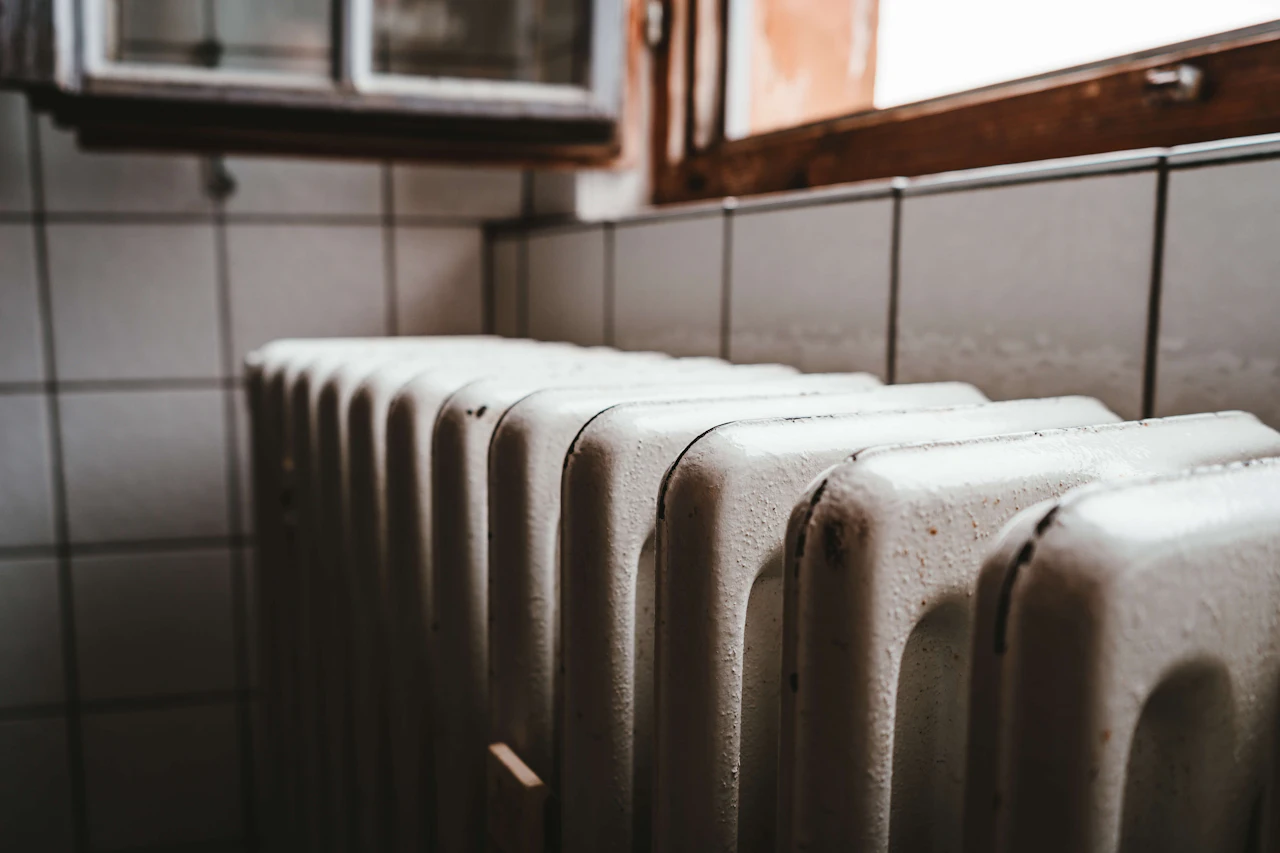
Heating Bill in Denmark: Aconto, Deadlines and Objections
Updated November 2026. Has your landlord sent you a heating statement (varmeregnskab) saying you owe several thousand kroner, or are you unsure why your water statement looks the way it does? As a general rule, you have 6 weeks from the day the statement reaches you to object in writing. Your landlord also has deadlines, and a landlord who misses them may lose the right to ask you for any extra payment.
This guide explains what aconto is, which deadlines apply to utility statements, what to check in the statement and how to object. It covers private rental homes under lejeloven (the Danish Rent Act). If you live in an almen bolig (non-profit social housing), almenlejeloven applies instead, and the rules may be different.
What is aconto?
Aconto means you pay a fixed amount every month along with your rent. The amount covers your expected use of, for example, heating or water. Once a year, the landlord draws up a forbrugsregnskab (utility statement), which compares what you actually used with what you have paid. If you paid too little, you pay the difference. If you paid too much, you get money back.
Lejeloven sets some limits on the aconto amount (§ 71):
- The landlord can introduce aconto payments or raise the amount with 6 weeks’ notice before a payment date.
- Aconto is paid in equal amounts together with the rent.
- The total aconto amount for a year must not exceed the expected cost for the accounting period. If the landlord raises the amount, the monthly payment may be no more than one twelfth of the expected annual cost.
In other words, the landlord may not use aconto as a way of building up extra savings. On the other hand, it can pay to ask for a higher aconto amount yourself if you can see your consumption has gone up. That way you avoid one large bill all at once.
Five separate statements: heating, water, electricity, gas and cooling
If the landlord supplies utilities, the costs must be set out in five separate statements: heating and hot water, cooling, water, electricity and gas (§ 72(1)). Most tenants only receive one or two of them, typically heating and water. Each statement has its own deadlines, so an objection to the heating statement does not automatically cover the water statement.
Your contribution to the utility statements is a pligtig pengeydelse (a mandatory payment) (§ 72(3)). This means it is treated the same way as rent under your tenancy. An unpaid balance can therefore have serious consequences, just like unpaid rent.
The deadlines at a glance
| What | Deadline | Lejeloven |
|---|---|---|
| Notice of new or higher aconto | 6 weeks before a payment date | § 71 |
| Accounting year for heating, electricity, gas and cooling | Starts on 1 June unless otherwise agreed | § 74(1) |
| The statement must have reached you | No later than 4 months after the end of the accounting year | § 75(1) |
| Special rule for e.g. district heating and natural gas | If the supplier’s final bill arrives late, the deadline can be 3 months after the landlord received it | § 75(2) |
| Your objection | In writing, no later than 6 weeks after the statement reached you | § 77 |
| The landlord wants to maintain the claim | The case must be brought before Huslejenævnet no later than 6 weeks after your deadline has expired | § 77 |
| Extra payment | At the earliest with the rent due once at least 1 month has passed since the statement reached you | § 78(1) |
| Surplus owed to you | Paid back or deducted from the first rent payment after the statement | § 78(2) |
Huslejenævnet is the municipal rent tribunal that settles disputes between tenants and landlords.
The accounting period does not have to run from 1 June to 31 May. The landlord can change it with 6 weeks’ notice, and the transition period may be no longer than 18 months (§ 74). With district heating (fjernvarme), for example, the statement usually follows the supplier’s accounting year, and the water statement usually follows the waterworks’ billing period. So always check which period your statement covers before you work out the deadlines.
What must the statement include?
Under § 73, the utility statement must as a minimum state:
- your share of the total costs
- your right to object
- if the statement only arrives after the 4-month deadline because of the special rule for collective supply: when the landlord received the final bill from, for example, the district heating plant
If this information is missing, the statement is invalid. This is one of the most overlooked errors, and it is worth checking first.
You also have the right to see the supporting documents. Once the statement has been sent out, the landlord must, at your request, give you access to go through them, either at the property or somewhere else in the local area (§ 76).
Checklist: How to go through your utility statement
Use this list when you sit down with the statement. Write down your questions as you go, so you have them ready for an objection.
- Date. When did the statement reach you? Keep the envelope, email or message. The date determines both your deadline and the landlord’s.
- Period. Does the accounting period match what your lease says, or has the landlord given notice of a change?
- Timeliness. Did the statement arrive no later than 4 months after the end of the period? If not, does it state when the landlord received the final bill from the supplier?
- Right to object. Does it say that you can object, and how?
- Your payments. Does the aconto amount deducted match what you have actually paid? Compare with your bank statements.
- Moving in and out. If you moved in or out during the period, check that you only pay for your own period and that the meter reading from when you moved in has been used.
- The split. How are the costs divided between the tenants: by meters, by floor area or something else? Is your floor area correct?
- Meter readings. Do the readings match what you can see on the meters yourself or in the consumption portal? Does the figure look like a typo?
- Cost items. Are there items that don’t belong? See the sections on heating and water below.
- Compare with last year. A sharp rise in consumption without any change in your daily life is a good reason to ask questions.
The heating statement: what to look out for
Only the energy cost for the period. If the building has its own boiler, the heating statement may only include the cost of the energy used during the period. If the heat comes from a collective system, such as district heating, or from natural gas, the total cost paid to the supplier is included (§ 72(4)). Repairs to a boiler are generally not an energy cost. However, costs of inspection, servicing and maintenance that the landlord is required to carry out under energy-saving legislation may be included.
Monthly consumption information. If the building has remotely read meters or remotely read heat cost allocators, you must receive information about your heating consumption at least once a month during the heating season. The information can be sent electronically or made available on a website, but in that case you must be notified when it has been updated (energioplysningsbekendtgørelsen § 9, in Danish). Use it. It is the easiest way to avoid a nasty surprise in the statement. Following an amendment to lejeloven that took effect on 1 January 2024, the landlord may include reasonable third-party costs for the monthly consumption information in the heating statement.
Discounts must be credited. If the landlord receives a discount or similar from the supplier, the tenants must benefit from it in the statement (§ 72(2)).
Energy label. The cost of the energy label (energimærke) must be spread in equal amounts over the period the label is valid (§ 72(5)). If the entire cost appears in a single year’s statement, ask about it.
The water statement: all supply costs can be included
In the water statement, the landlord may include all costs of the water supply, including the water charge and the drainage charge (afledningsafgift), that is, payment for wastewater (§ 72(6)). That is why the price per cubic metre can look high. This is normal.
What you mainly need to check is your meter reading and the split. A running toilet or a faulty meter can cause unusually high consumption. If you notice high consumption during the year, tell your landlord straight away. It is much harder to document afterwards.
If a cost has been moved out of the rent and into a utility statement, for example when the building got water meters, the rent must be reduced accordingly (§ 72(7)). You should not pay for the same thing twice.
Electricity: your own contract or split by the landlord?
Most tenants have their own electricity contract and pay the electricity company directly. In that case there is no electricity statement from the landlord, and any disagreement about the electricity bill is between you and the electricity company.
If the landlord buys electricity for the building and splits it between tenants, the rules in lejeloven apply. If the electricity is used for anything other than heating, the cost may only be split on the basis of approved individual meters (§ 69). So the landlord cannot simply divide the electricity bill equally between the tenants. Tenants can also demand to pay the electricity company directly, with 6 weeks’ notice. If it concerns electricity for heating, the notice must be given for the start of a heating accounting year (§ 70).
If you want to bring down a high electricity bill, you can find practical advice in our article on how to save on electricity.
How to object, step by step
- Work out your deadline. Count 6 weeks from the day the statement reached you. If you received it on 10 November 2026, your deadline is 22 December 2026.
- Ask for the supporting documents if you need more information. You are welcome to ask to see them, but don’t hold off on your objection until you get a reply. The deadline keeps running.
- Write the objection. It must be in writing and state which points in the statement you cannot accept (§ 77). A general message saying you disagree is not enough.
- Send it in a way you can prove. Use email, digital post or registered letter, and keep a copy.
- Wait for the landlord’s response. If the landlord wants to maintain the extra payment, the landlord must bring the case before Huslejenævnet no later than 6 weeks after your objection deadline has expired. In the example above, that is 2 February 2027.
- Consider going to Huslejenævnet yourself. Disputes about utility statements and aconto are decided by Huslejenævnet (§ 82).
If you live in a building with beboerrepræsentation (an elected tenants’ committee), the tenant representatives can object on behalf of all the tenants (§ 77). If many tenants have the same objection, it can be a good idea to go to them.
Example of an objection
To [landlord]
I hereby object to the heating statement for the period 1 June 2025 to 31 May 2026 for the flat at [address], which I received on [date].
I cannot accept the following points:
- My aconto payments are stated as DKK 6,000. I have paid DKK 7,200 (12 x DKK 600), as shown in the attached bank statements.
- The meter reading for the living room is stated as 4,850 units. I read 1,485 units on 31 May 2026 and assume there is a typing error.
I also ask to see the supporting documents for the statement, cf. section 76 of lejeloven.
Kind regards [name, address, date]
Adapt the points to your own case. The more specific you are, the easier it is for the landlord to correct a mistake without a case.
If you have to pay extra
- The extra payment can be demanded at the earliest together with the rent due once at least one month has passed since you received the statement (§ 78(1)).
- If the extra payment exceeds 3 months’ rent, you can choose to pay in three equal monthly instalments. The first instalment is due when the extra payment would otherwise have been due.
- If you move out, any extra payment must be paid no later than the day you move out. If the statement only arrives after you have moved, the amount is often deducted from your depositum (deposit). Read more about the move-out inspection and your deposit.
If you have objected, be careful about simply not paying. The balance is a pligtig pengeydelse, and the rules on what you may withhold while a case is running depend on the situation. At the very least, pay the part you don’t dispute, and get advice before you withhold the rest.
If you can’t afford a large balance, contact your landlord quickly and suggest a repayment plan. That is better than leaving the bill unpaid.
If you have paid too much
If the statement shows a surplus, you must get the money back, or it must be deducted from the first rent payment after the statement (§ 78(2)). At the same time, consider whether the aconto amount should be lowered. The landlord may not charge more in aconto than the expected cost.
If the statement arrives late
- After the deadline in § 75, the landlord loses the right to demand extra payment for the period (§ 79(1)). This applies even if you actually used more than you paid aconto for. Remember the special rule: if the landlord received the supplier’s final bill late, the deadline can be longer, and the statement must then state when the bill was received.
- More than 2 months after the deadline, you can stop paying aconto until the statement has reached you and you have received any surplus (§ 79(2)).
Example: The heating accounting year runs from 1 June 2025 to 31 May 2026. The statement must then, as a general rule, reach you no later than 30 September 2026. If it arrives on 20 October 2026 and the special rule does not apply, the landlord cannot demand extra payment. If there is still no statement on 30 November 2026, you can stop your aconto payments until the statement arrives and any surplus has been paid back. Notify your landlord in writing before you stop.
If the landlord has left a cost item out of the statement, it can in some cases be included in the following year’s statement, provided it is no more than 10 percent of the total costs and the tenants are informed (§ 80). An incorrect split between tenants must be corrected by written notice.
Common mistakes tenants make
- They wait too long. The 6-week deadline runs from when the statement reached you, not from when you found time to read it.
- They phone instead of writing. A spoken objection does not meet the requirement for it to be in writing.
- They write too generally. “I disagree” is not enough. Point to the specific items.
- They don’t check the dates. Many never discover that the statement arrived too late or that it is missing information about the right to object.
- They forget the meter reading when moving in. Take a photo of all the meters on the day you get the keys.
- They withhold aconto too early. The right to stop aconto payments only begins 2 months after the landlord’s deadline.
Advice for tenants
- Check your lease to see which utilities you pay aconto for and which accounting period applies. See also our guide to understanding a Danish lease agreement.
- Keep an eye on your consumption throughout the year using the monthly consumption information or by reading the meters yourself.
- Raise your aconto amount voluntarily if you can see your consumption is going up.
- If you are looking for a new home, ask about the most recent year’s utility statement and the aconto amount before you sign. Particularly in older houses, heating can make up a large part of your housing costs. Read more in our guide to renting a house in the countryside.
- If you want to cut your actual consumption, you’ll find advice in our article on how to save water and heat.
Advice for landlords
- Put the deadlines in your calendar. The end of the accounting year plus 4 months is your deadline. If you miss it, you may lose the entire extra payment.
- Check the content. The statement must state the tenant’s share and the right to object. If you use the special rule for district heating or natural gas, the date of the final bill must be shown. Otherwise the statement is invalid.
- Document that you sent it. What counts is when the statement reaches the tenant.
- Keep aconto realistic. Raise the amount with 6 weeks’ notice when prices or consumption go up, but no higher than the expected cost.
- Remember meter readings when tenants move in and out, so consumption can be split correctly.
- Respond to objections. If you want to maintain your claim after an objection made on time, you must bring the case before Huslejenævnet yourself within 6 weeks of the tenant’s deadline.
- Give access to supporting documents when the tenant asks.
When should you get help?
Contact a lejerforening (tenants’ association), a lawyer specialising in tenancy law or another adviser if the extra payment is large, if you are thinking about withholding payments, or if the landlord has brought the case before Huslejenævnet. As a landlord, you should get advice if you are unsure which costs may be included or whether a deadline has been met. The rules can depend on the building’s utility supply, the lease and the specific situation.
In short
- Aconto is an advance payment. The utility statement shows whether you have to pay extra or get money back.
- As a general rule, the landlord must send the statement no later than 4 months after the end of the accounting year. Otherwise the landlord may lose the right to extra payment.
- You have 6 weeks from when the statement reaches you to object in writing and specifically.
- Check the dates, the right to object, your payments, the meter readings and the split.
- If the extra payment is more than 3 months’ rent, you can pay in three instalments.
- If you disagree, the case can be decided by Huslejenævnet.
FAQ
How long do I have to object to my heating statement?
6 weeks from the time the statement reached you. The objection must be in writing and state which points you cannot accept. The deadline also applies to water, electricity, gas and cooling statements.
When must the heating statement be sent to the tenant?
As a general rule, no later than 4 months after the end of the accounting year. With district heating, for example, the deadline can be 3 months after the landlord received the final bill, if that bill arrives late. The statement must then state when the bill was received.
Do I have to pay if the heating statement arrives late?
If the statement arrives after the deadline, the landlord loses the right to demand extra payment. If you have paid too much, you are still entitled to get the surplus back.
Can I pay a large balance in instalments?
Yes, if the extra payment is more than 3 months’ rent. You can then pay in three equal monthly instalments. If the amount is lower, you can always suggest a voluntary repayment plan to your landlord.
How much can the landlord raise the aconto amount?
The landlord must give 6 weeks’ notice, and the total annual aconto amount must not exceed the expected cost. The monthly amount may be no more than one twelfth of the expected annual cost.
Who decides disputes about a utility statement?
Huslejenævnet in the municipality where the home is located. If you have objected on time and the landlord wants to maintain the claim, it is the landlord who must bring the case.
Sources and further reading
- Retsinformation: Lejeloven, lov nr. 341 af 22. marts 2022 (the Rent Act, Act no. 341 of 22 March 2022, in Danish), chapter 7, especially §§ 69-80 and § 82
- Lov nr. 1793 af 28. december 2023 om ændring af lejeloven m.fl. (Act no. 1793 of 28 December 2023 amending the Rent Act and other acts: reimbursement of costs for monthly consumption readings)
- Retsinformation: Bekendtgørelse nr. 1168 af 2. oktober 2025 om energivirksomheder og bygningsejeres oplysningsforpligtelser (energioplysningsbekendtgørelsen) (Executive Order no. 1168 of 2 October 2025 on the information obligations of energy companies and building owners, in Danish), § 9
- Borger.dk: Beboerklagenævn og huslejenævn (residents’ complaints boards and rent tribunals, in Danish)