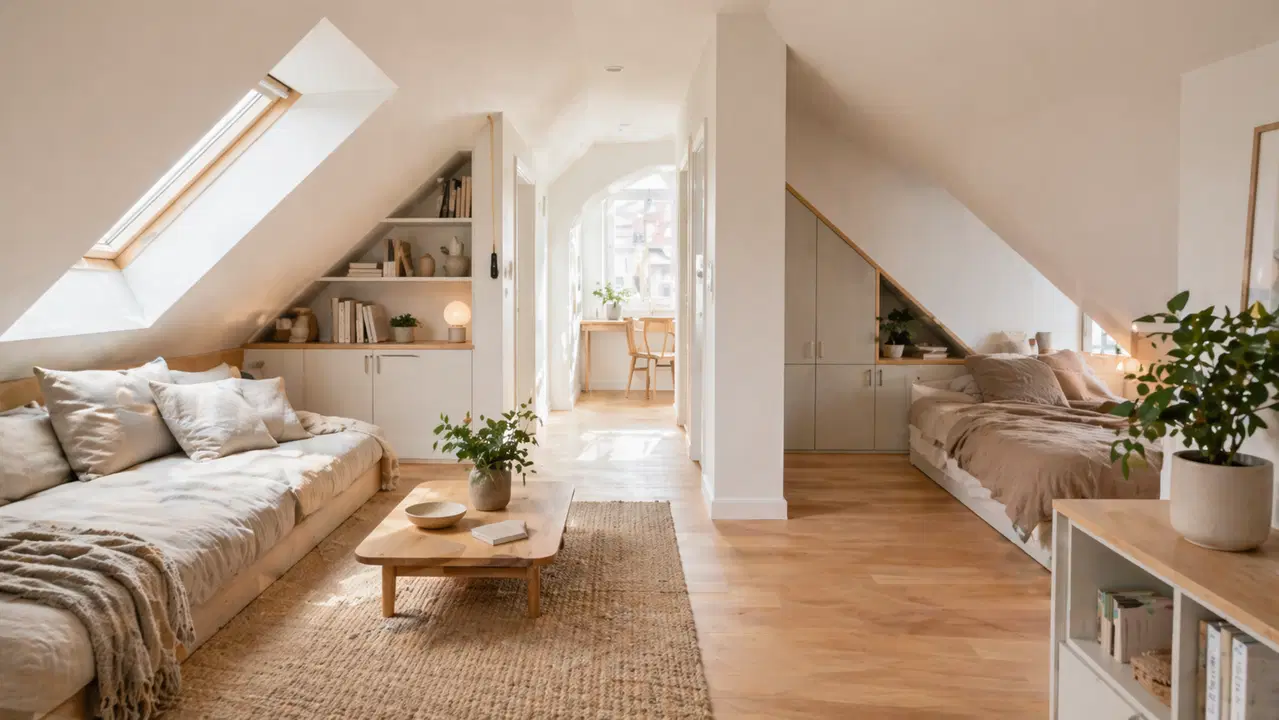
Decorating with sloped walls: Get more space in your apartment
Sloped walls can make an apartment feel cozy, but they can also steal usable space if you furnish the room as if all walls were straight. The key is to use low areas for functions that do not require full standing height and keep the higher areas open for movement, dining and work.
Do not start by buying furniture. Start by measuring.
Measure the apartment properly
In an apartment with sloped walls, floor area is not enough. You need to know where you can actually stand, sit and open cupboards.
Measure:
- The height at the lowest wall.
- The height 60, 90 and 120 cm from the sloped wall.
- Where doors, radiators, windows and sockets are placed.
- Where you can walk upright without ducking.
- Whether large furniture can be carried up the stairs and through doors.
Make a simple floor plan and mark areas as “standing height”, “sitting height” and “storage”. It makes furniture decisions much easier.
Use low areas for low functions
The best functions under sloped walls are those where you sit, lie down or store things:
- Bed
- Sofa or armchair
- Low chest of drawers
- Bench with storage
- Low shelving
- TV unit
- Drawers on wheels
- Seasonal storage in boxes
Avoid placing a dining table, wardrobe or desk where you hit your head every time you stand up.
Bedroom with a sloped wall
A bed often works well under a sloped wall, but think about how you get in and out of it. If two people use the bed, at least one long side should have enough height. In a very small room, place the headboard toward the low wall and the foot of the bed toward the room.
Useful solutions:
- Use wall lamps instead of bedside tables.
- Choose a bed with drawers or lift-up storage.
- Use low shelves as bedside tables.
- Keep the area above your head clear if the wall is very low.
Storage: think drawers, not tall wardrobes
Tall wardrobes rarely work well against sloped walls. Use:
- Custom-built storage if your budget and lease allow it.
- Low modular drawers.
- Open shelves in decreasing height.
- A clothing rail in the highest part of the wall.
- Boxes under the bed, sofa or bench.
If you rent, be careful with built-in solutions that require drilling or permanent installation. Ask the landlord before making larger changes.
Lighting makes the difference
Sloped walls can create dark corners. Combine several light sources instead of relying on one ceiling lamp:
- Ceiling light or pendant in the highest area.
- Wall lamps by the bed or sofa.
- LED strips under shelves.
- Floor lamp where height allows it.
- Mirrors that reflect daylight.
If the windows are roof windows, use blinds made for them. Normal curtains often hang poorly on sloped surfaces.
Create clear zones
In small attic apartments, functions easily blend together. Use rugs, lamps and furniture direction to create zones:
- Sofa and rug define the living area.
- Dining table goes where there is full standing height.
- Desk gets the best combination of light and headroom.
- Storage is gathered along low walls.
This makes the apartment feel more intentional and less crowded.
Checklist before buying furniture
- Have you measured the height where the furniture will stand?
- Can drawers and doors open?
- Can you stand up from the chair without hitting the wall?
- Can the furniture get up the stairs?
- Is there room for roof-window blinds?
- Are radiators and ventilation kept clear?
- Are you allowed to drill or mount shelves?
Advice for tenants
Choose flexible solutions first: freestanding drawers, modular shelving, wheeled storage and furniture with built-in storage. Wait with expensive custom solutions until you know how you use the apartment.
Take photos when you move in, especially if there are marks, old drill holes or uneven surfaces near sloped walls. It can prevent disputes when you move out.
Advice for landlords
If you rent out an apartment with sloped walls, make the usable space easy to understand. Show the low areas honestly in photos, and consider a simple floor plan with measurements. It reduces disappointment and helps applicants judge whether the home fits their furniture.
Basic features such as roof-window blinds, hooks and good lighting can make the home much easier to use.
Common mistakes
- Buying a standard wardrobe without measuring the slope.
- Placing a desk where you cannot sit upright.
- Using too few light sources.
- Filling the high areas with storage and ruining movement.
- Drilling into sloped walls without checking rules or construction.
FAQ
Which furniture works best under sloped walls?
Low furniture such as beds, sofas, benches, low drawers, TV units and storage boxes usually works best.
How do I get more storage?
Use low modules, under-bed storage, shelves in decreasing height and custom storage if your budget and lease allow it.
Can I place a desk under a sloped wall?
Yes, but only if you can sit and stand up without hitting the wall. Test the chair position, not just the desk depth.
How do I make an attic apartment feel larger?
Keep standing-height areas open, use several light sources, choose low furniture and gather storage along the sloped walls.
Can I mount shelves in a rental with sloped walls?
It depends on your lease and landlord’s rules. Ask if you are unsure, especially for larger or fixed installations.
Sources and further reading
- Editorial interior guidance based on common Danish rental apartments.
- Danish Ministry of Social Affairs, Housing and Senior Citizens: Lease agreement, https://www.sm.dk/arbejdsomraader/byggeri-og-boliglovgivning/private-lejeboliger/lejekontrakt